In this section you will find:
1. Installation Design Summary
2. Technical Drawings & Construction
3. Installation Space
4. Audio Soundscape Design
Installation Design Summary
The aim of the installation was to create an environment that encapsulates the transformative potential of immersive light art based on James Turrell’s Ganzfeld works and Eliasson’s projects titled Room for All Colours and Your Coloured Memory. These works have demonstrated to evoke transformative effects (see critical output) in mass audiences, however, there is little researched in academia. To test the hypothesis, I designed and produced a large cylindrical, enclosed chamber made of lycra material that got flooded with colored light from externally positioned LEDs. It was accompanied by a carefully designed, neutral soundscape.
I tried to create an environment that would remove viewers from ordinary reality, hoping that the striking experience of color combined with the grounding sound would make people pause, and have a conscious experience from which new thinking and being can emerge. The installation was therefore a truly encompassing and absorbing environment. Its physical shape was inspired by Eliasson’s aforementioned projects, however, there were two critical design points at play. Firstly, my time and financial scope were limited, secondly, I wanted to provide an enclosed experience, without any spatial gaps.
Therefore, I had to create a small-scale installation for 6 people to experience at a time, employing various materials to construct the immersive environment within a large studio space that was provided to me by an artist I have previously worked with. After assessing my options and testing various materials, I settled on white theater standard lycra fabric for the construction of the canopy. The fabric ensured that whilst the inner realm of the installation is flooded with color, the outer realm of the external room remained invisible to visitors on the inside. The construction and sound design are described below, light and color design is described in the next section.
Technical Drawings & Construction
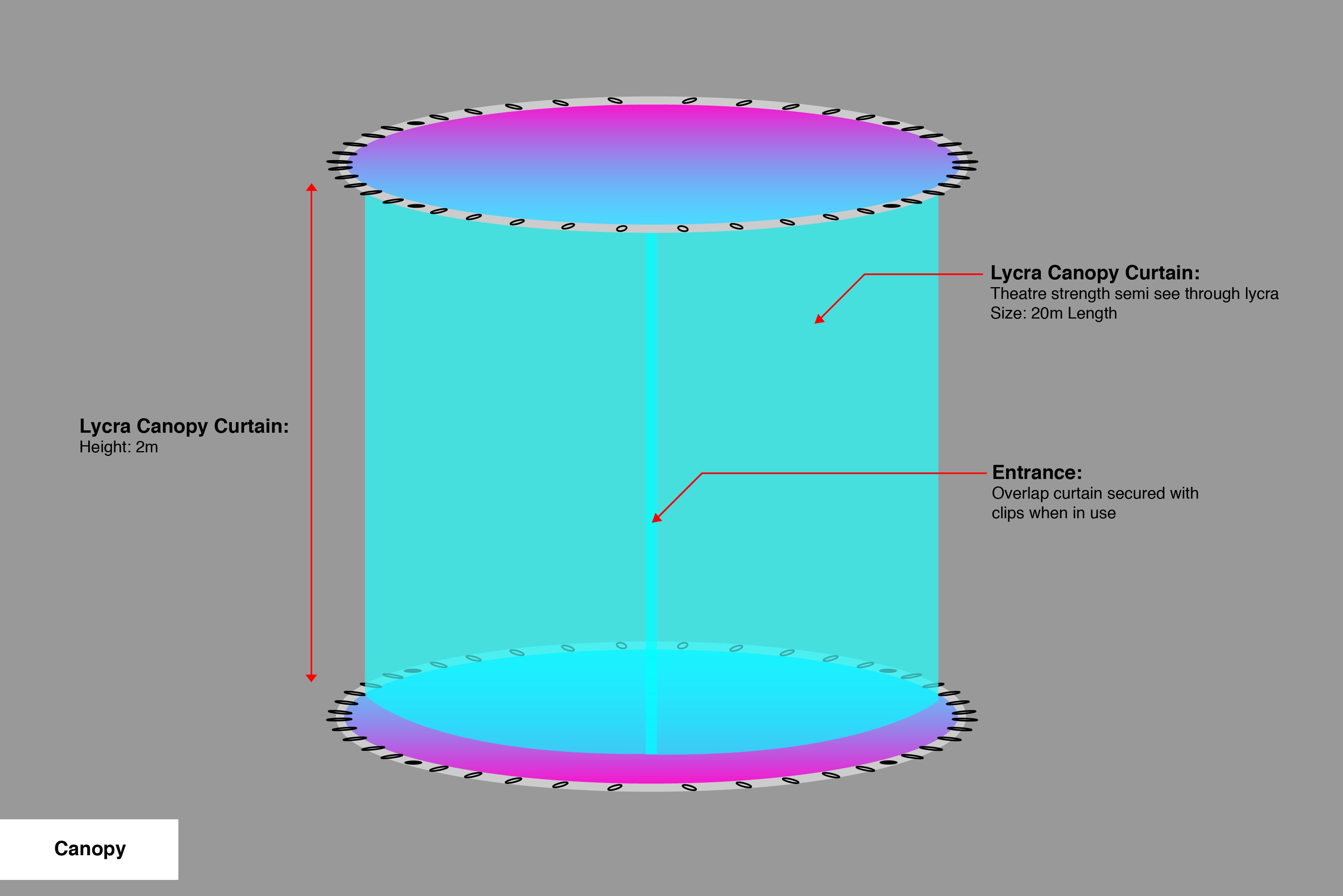
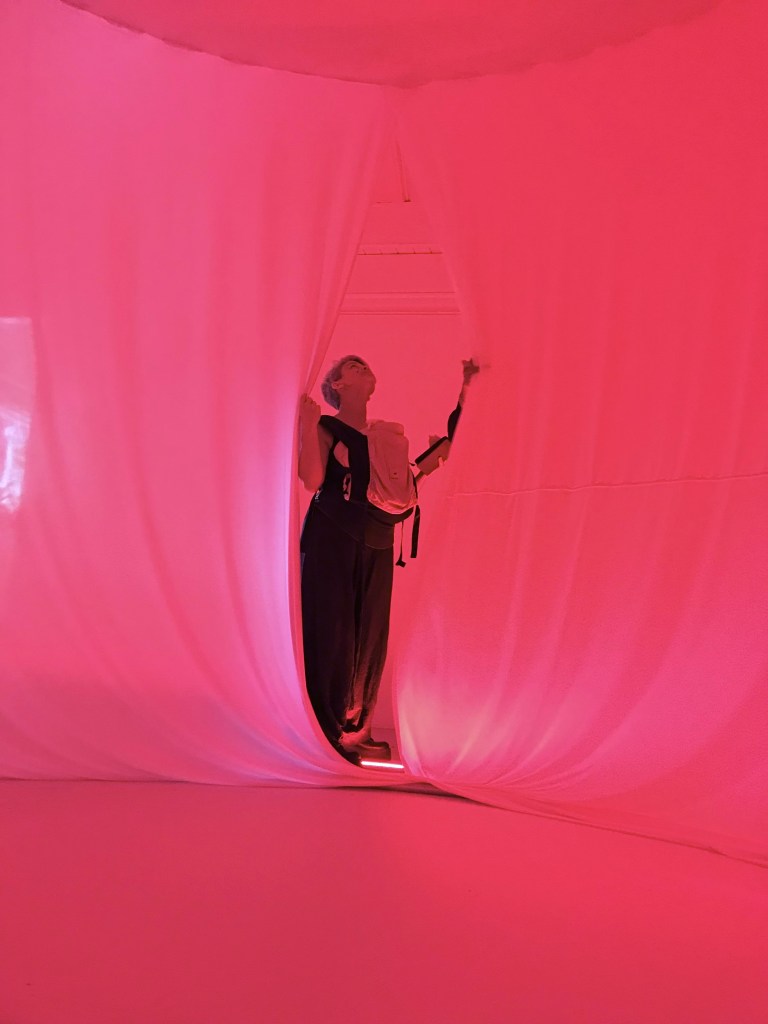
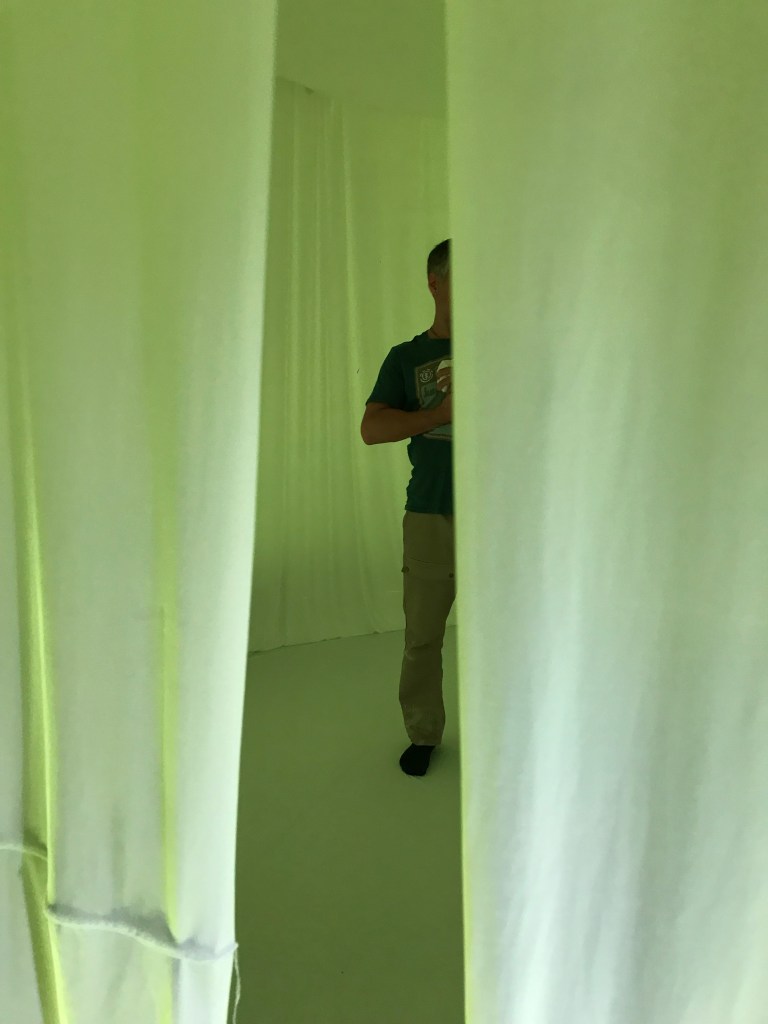
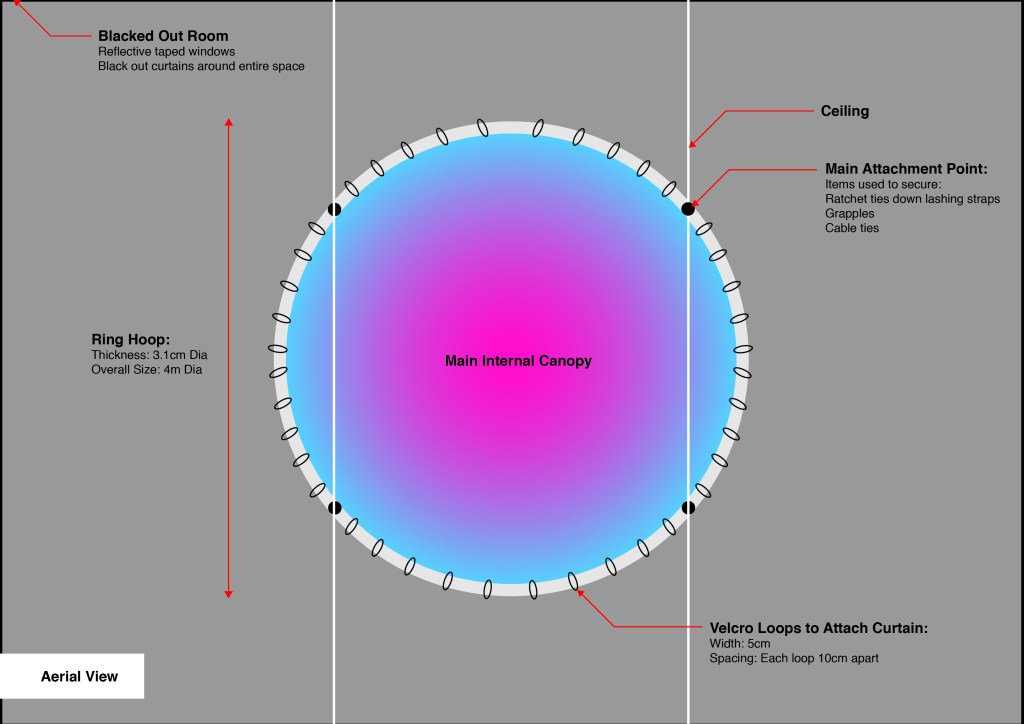

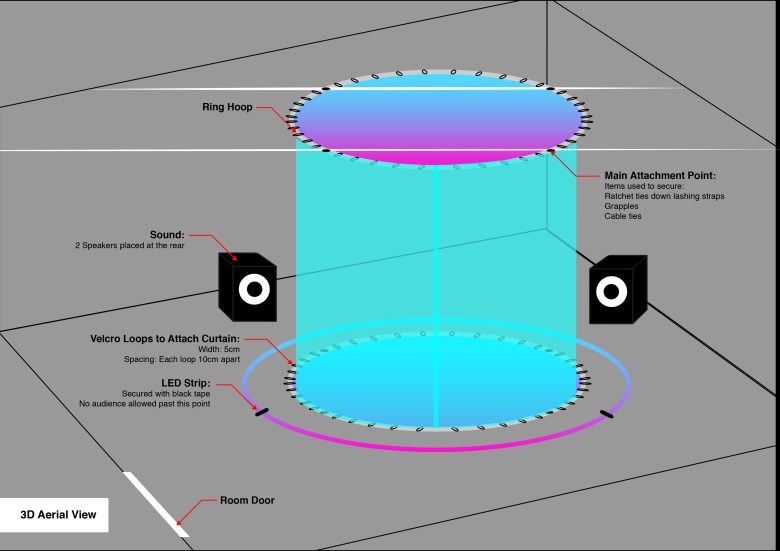
The technical design drawings show the dimensions and positioning of the canopy structure from various angles. They illustrate the suspension of the canopy which was hanging down from the ceiling to the floor for the duration of the installation. The canopy structure was attached to metal rigging bars, regularly used for aerial yoga classes where 15+ adults are suspended from these bars.
The rigging, therefore, is designed and tested to withhold heavyweights. In order to establish absolute safety for this installation, it was decided to use maximum security measures to hold heavy structures in place when suspended above the ground.
Because of the installation shape’s large circumference and the tall height (dimensions listed in technical design drawings above), combined with the heaviness of the canopy fabric and the metal hoop to which it attached, we used lock-in straps, metal grapples, and zip ties to secure the metal hoop to the four points positioned across two rigging bars.
Lastly, velcro loops, each being 5cm wide (again see above drawings), spaced 10cm from the other were sewn into the outside fabric of the top circle (the ‘roof’ enclosing the canopy), thereby, ensuring the canopy structure is tightly and thoroughly secured to the metal hoop suspended below the ceiling.

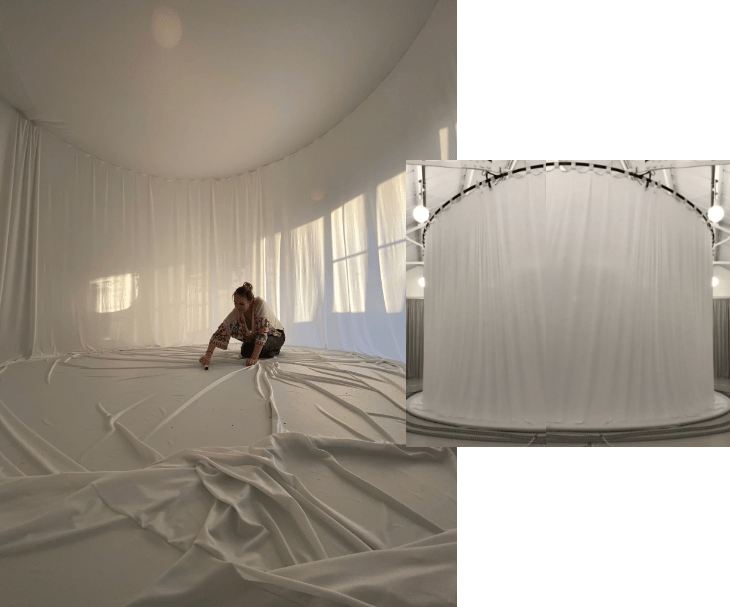
The construction of the canopy is fairly straightforward. The fabric structure comprises top and bottom circles, joined in a cylinder shape by the ‘wall’ of the installation. The canopy loops are attached to the top metal hoop and the bottom is threaded through the metal hoop on the floor, which holds the structure upright. The metal hoops ensure the circular shape is achieved in the canopy. Whilst three hired production crews were putting up the installation structure, I focused on covering the windows with reflective sheets, which together with blackout curtains ensured no natural or external light got in.
Installation Space
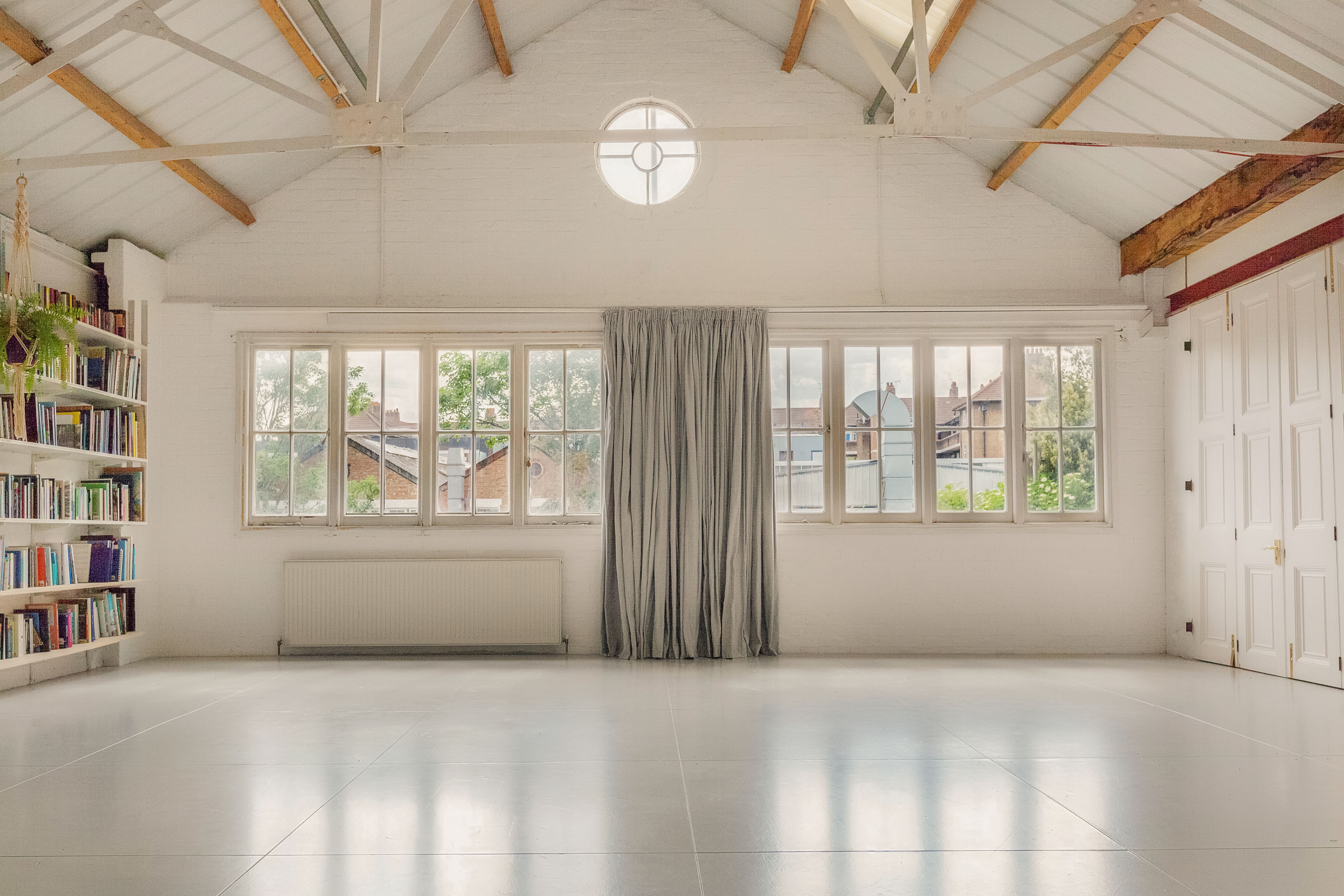
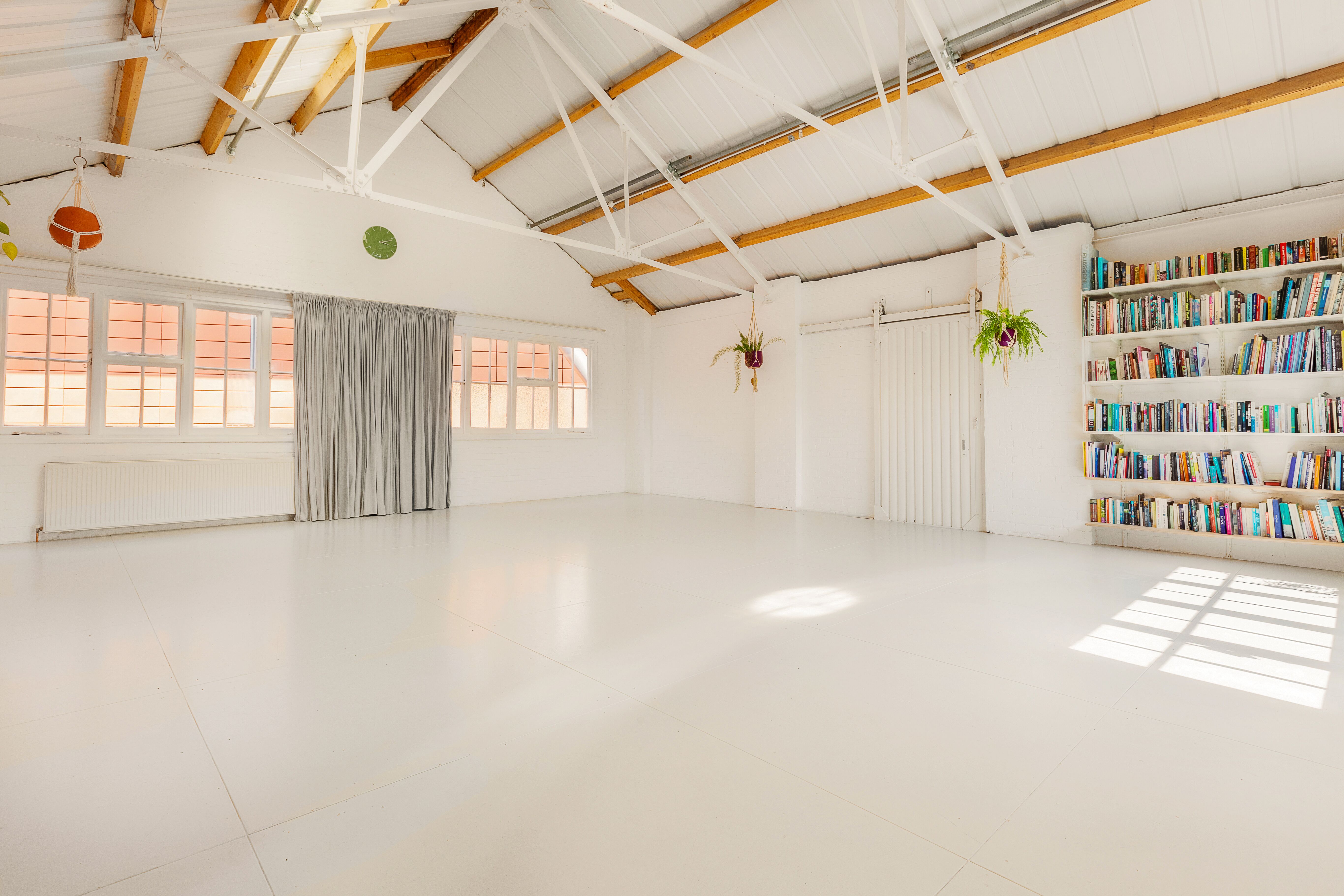
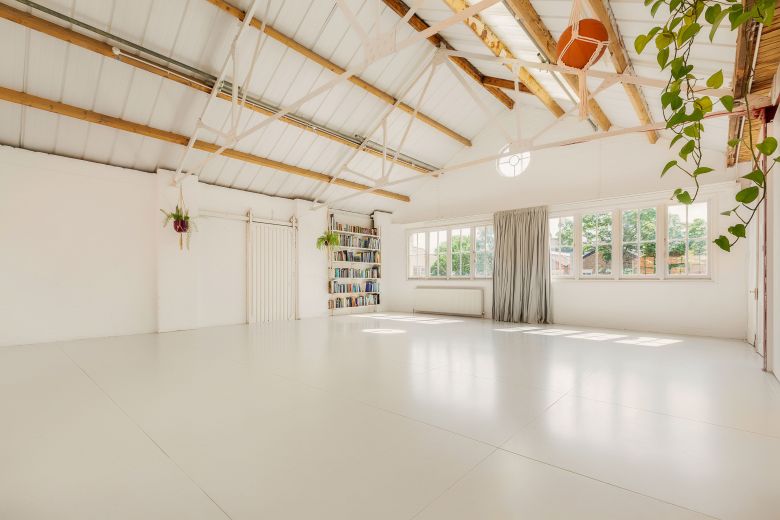
The images below showcase the spacious studio space where the installation was held. You can also see the rigging bars used for suspending the canopy structure.
Audio Soundscape Design
There was a soundscape accompanying the installation. It was eighteen minutes long and designed to be a grounding factor in the intense color environment. It accentuated the rhythmic base sound to aid viewers in focusing their attention inward. The soundscape was made by a sound alchemist Fabio Garzes, whom I worked closely with to design the sound journey with. The sound was spatio-dimensional, it moved around you building or receding rhythmically which further aided immersion for participants.
Installation soundscape can be heard here:
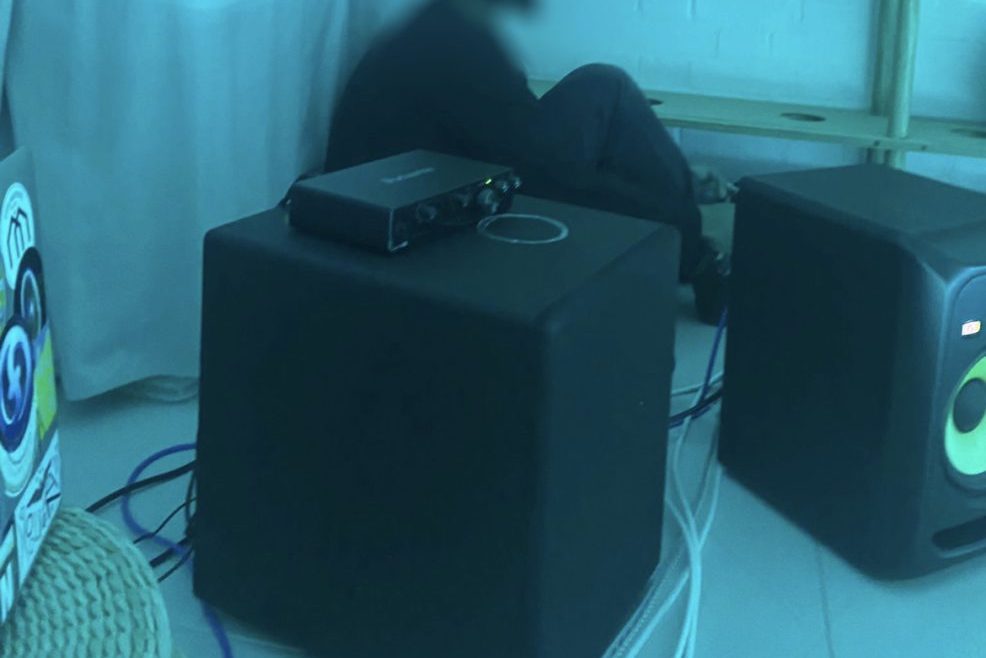
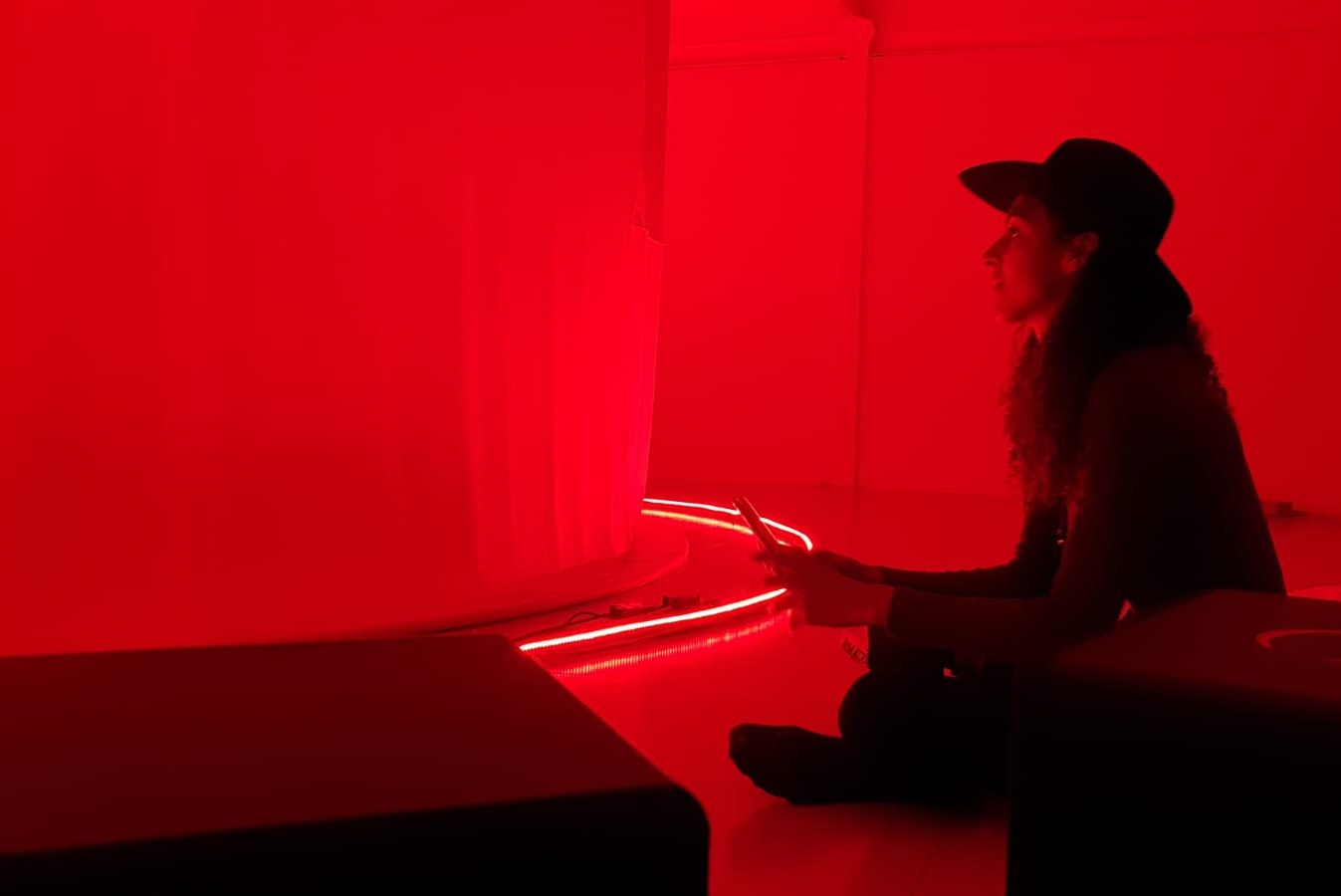
A professional sound system was used (see below design plan and installation snapshots) to produce the highest quality of sound. Speakers were hidden away at the back of the room (furthest from the entrance) where myself and the invigilators were sat. They could not be seen by the audience.
 Immersion: transcendent light